 Image 1 of 2
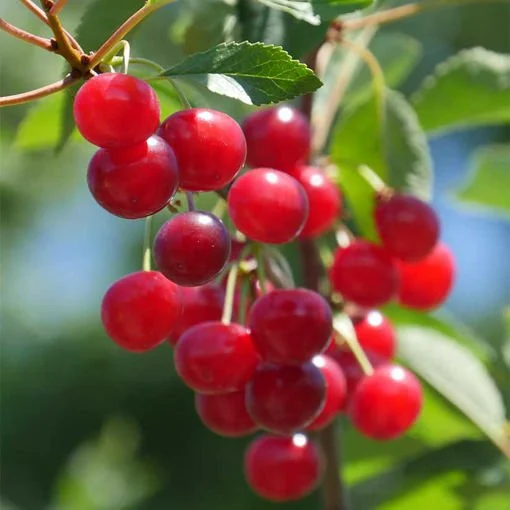 Image 2 of 2
Prunus cerasus 'Montmorency'
Hardiness Zone: 4
Height: 8-18 feet
Spread: 10-20 feet
Sun: full sun
Soil Composition: well-drained
Maintenance: low
Water: moderate
Flowers: white, showy in spring
Fruit: edible, showy
Description: America's most popular tart cherry for pies and preserves, the montmorency cherry is a cold-hardy tree whose fruit ripens around July. The medium-large, bright red fruit has a firm yellow flesh; clear juice; and a rich, tart flavor. The tree is self-fertile.
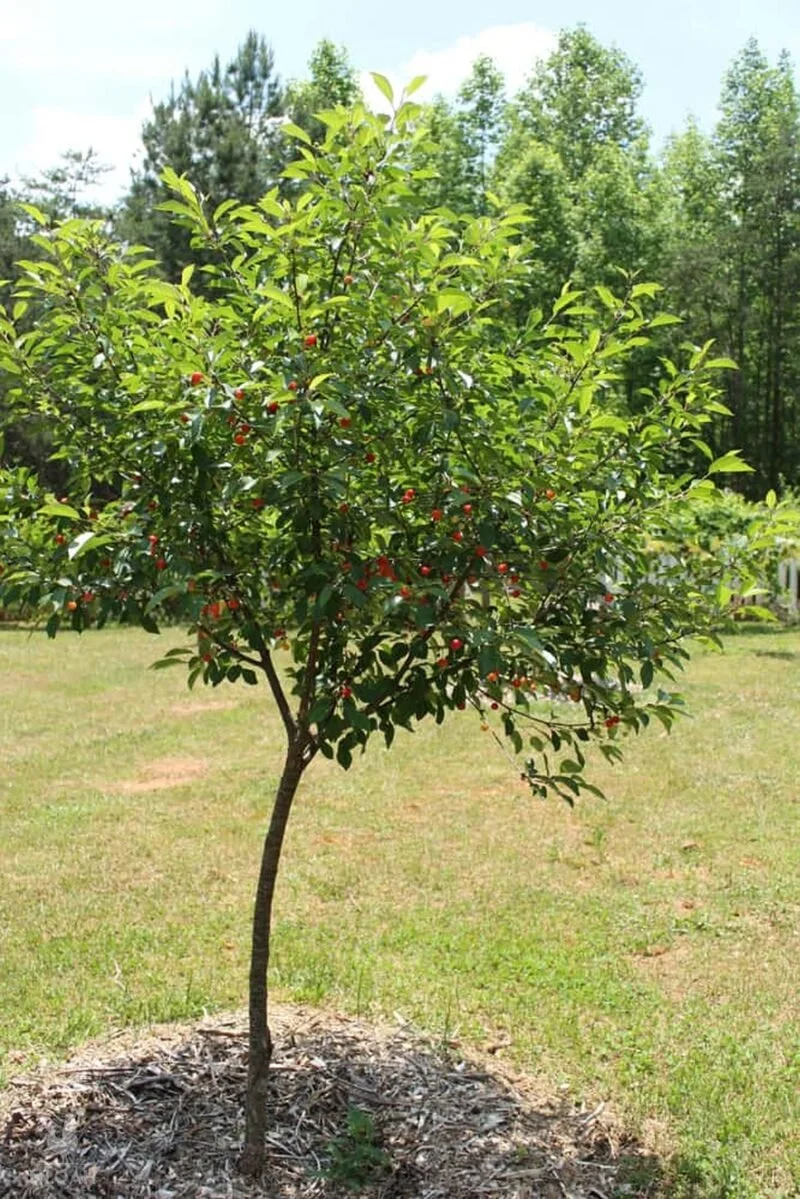
Ornamental Features: This deciduous tree blooms white clustered flowers, producing bright red fruits. Birds are attracted to the fruit--timing is key to ensuring there is fruit available for the avid baker! Elliptic leaves with acute tips are smooth and dark green. The tree grows into an overall rounded shape.
Planting & Growing: Easily grown in average, medium moist, well-drained soil. Tolerant of a somewhat wide range of soils, but prefers well-drained loam or sandy soils. No serious insect problems. Leaf spot, powdery mildew, and necrotic ring spot are occasional disease problems avoided through proper care. This cultivar is very dependable in our growing area.
Best grown in front yards. This tree is not recommended for planting in right of ways since it stays fairly compact and can impede traffic visibility. Plant at least 10 feet from fire hydrants, ground mounted utility boxes, buildings, fences and driveways. Plant at least 5 feet from shrubs and other similar-sized trees. Plant 15 feet from large trees.
Source: Arbor Day Foundation (arborday.org), newlifeonahomestead.com
Prunus cerasus 'Montmorency'
Hardiness Zone: 4
Height: 8-18 feet
Spread: 10-20 feet
Sun: full sun
Soil Composition: well-drained
Maintenance: low
Water: moderate
Flowers: white, showy in spring
Fruit: edible, showy
Description: America's most popular tart cherry for pies and preserves, the montmorency cherry is a cold-hardy tree whose fruit ripens around July. The medium-large, bright red fruit has a firm yellow flesh; clear juice; and a rich, tart flavor. The tree is self-fertile.
Ornamental Features: This deciduous tree blooms white clustered flowers, producing bright red fruits. Birds are attracted to the fruit--timing is key to ensuring there is fruit available for the avid baker! Elliptic leaves with acute tips are smooth and dark green. The tree grows into an overall rounded shape.
Planting & Growing: Easily grown in average, medium moist, well-drained soil. Tolerant of a somewhat wide range of soils, but prefers well-drained loam or sandy soils. No serious insect problems. Leaf spot, powdery mildew, and necrotic ring spot are occasional disease problems avoided through proper care. This cultivar is very dependable in our growing area.
Best grown in front yards. This tree is not recommended for planting in right of ways since it stays fairly compact and can impede traffic visibility. Plant at least 10 feet from fire hydrants, ground mounted utility boxes, buildings, fences and driveways. Plant at least 5 feet from shrubs and other similar-sized trees. Plant 15 feet from large trees.
Source: Arbor Day Foundation (arborday.org), newlifeonahomestead.com